I've sat across from clinical directors who heard "yoga and sound healing" and visibly checked out.
Fair. This field is full of things that feel good and don't hold up, experiential therapy gets marketed by its worst salespeople, and if you run a program accountable for outcomes, suspicion is the correct starting posture. You should be suspicious of anything that arrives wrapped in incense and big claims.
So let me answer the question the way I'd want it answered if I were sitting in your chair, budget sheet open: what does the evidence actually support about experiential therapy, where is it genuinely thin, and what should you ask providers instead of "do you believe in this?"
Experiential therapy is evidence-supported as an adjunct, not evidence-proven as a standalone treatment. Research backs mindfulness and movement-based practices for reducing stress reactivity, cravings, and withdrawal symptoms and improving regulation and sleep, while comparative trials against established treatments show mixed results. It belongs alongside clinical care, not in place of it.
That's the compressed answer. The full one includes numbers, limits, and the two variables no study can control for you.
One definitional note first, because precision is the whole point of this post. Experiential therapy proper is clinician-delivered treatment (psychodrama, art, equine work). The practices my team delivers, yoga, sound healing, breathwork, mindfulness meditation, are experiential wellness services: certified practitioners supporting regulation, not treating diagnoses. Much of the research below concerns mindfulness and movement practices, so it speaks most directly to the wellness layer, and I'll flag where that matters.
What the research actually shows
Start with the strongest honest findings, sources named.
The National Institutes of Health maintains the most sober summary I know. According to NCCIH's evidence review, a 2017 analysis of nine studies of mindfulness-based relapse prevention, 901 participants in total, found it was NOT more effective at preventing relapse than other treatments like health education and cognitive behavioral therapy. The same analysis found it did reduce cravings and withdrawal symptoms associated with alcohol use disorders.
Read that twice, because both halves matter. Not superior to established treatment. Genuinely helpful for cravings and withdrawal.
More recent work leans warmer. A 2021 systematic review found mindfulness-based relapse prevention had significant positive impact across substance use and clinical variables, with particular value for clients carrying both substance use and psychiatric symptoms, which describes a large share of the people in your building.
And the mechanism literature is consistent. A narrative review of yoga and mindfulness as complementary therapies for addiction catalogs reduced stress reactivity, improved emotional regulation, and greater capacity to sit with cravings.
One specific finding inside it: 56% of participants in a modified mindfulness course for smokers showed biologically confirmed abstinence six weeks after quitting. Smoking, six weeks, one study. I state it that way on purpose, and the reason is coming two sections down.
How to read this evidence like an operator
Before the cringe list, three reading rules that will serve you across every provider pitch you'll ever sit through.
Check the population. A finding from smokers in a university study doesn't transfer automatically to dual-diagnosis adults in residential care. Ask who was studied.
Check the timeframe and the comparator. "Better than nothing" and "better than CBT" are different claims separated by a canyon. The NCCIH finding above is exactly that canyon: mindfulness-based relapse prevention beat nothing, helped cravings, and didn't beat established treatments.
And check where the research ends, because it ends earlier than the practice does. The honest truth about this field is that the science stops where the research stops: there are far more people participating in these practices for their own healing than there are researchers funded to study them.
Sound healing in particular has a thinner evidence base than mindfulness, not because it fails in studies but because few studies exist. A provider should tell you that unprompted. I just did.
That gap cuts both ways. It means you shouldn't accept grand claims, and it means the absence of a large trial isn't the same as evidence of absence. Which is why the strongest evaluation combines the literature with something no journal can give you: what happens with your own population, in your own building, which I'll get to below.
The claims that should make you suspicious
You'll meet providers who turn that smoking study into "56% of addicts stay clean with mindfulness." Walk away from them.
Here's my cringe list, built from years of watching this space sell itself badly.
Inflated statistics with the qualifiers sanded off. If a provider quotes a number without the population, the timeframe, and the source, assume it's decoration.
Guaranteed-cure language. Anyone who tells you these practices are a cure for addiction or trauma is selling something. I've written about why in the mechanism post: these practices regulate the nervous system so clinical work can land. That's the claim. It's enough.
And a quieter tell from the business side: independent practitioners charging hourly rates with no awareness of where they sit in your organization. A facility will never pay an experiential provider dramatically more than its therapists or directors earn, nor should it. A provider who prices themselves above your clinical staff has told you what they don't understand about your world.
The two variables no study controls: willingness and buy-in
Here's the part of the evidence conversation nobody publishes, and it's the reason I make no promises to clients.
Every one of these modalities carries one strong variable: willingness. If a client isn't willing to participate in the sessions, the best-designed program in the world is limited in its efficacy. And willingness isn't fixed; it's built, which is why I treat participation policy and week-four arcs as operational design problems rather than evidence problems.
The second variable is organizational. If the facility doesn't buy in org-wide, if the director and the therapists don't see the sessions as a supportive and useful tool, the work gets quietly starved: bad rooms, interrupted sessions, optional attendance. Then the program "didn't work," and the modality takes the blame for an implementation failure.
So when I'm asked "is experiential therapy evidence-based," part of my honest answer is: the evidence describes what happens under study conditions. Your outcomes will be decided by willingness and buy-in, and those are yours to build. The research can't do it for you, and neither can I.
What won over the most skeptical room I work with
Twice a year or so, I face the hardest audience in my calendar: physicians.
At Kaiser Permanente events, including a "Healing the Healer" session for over 150 physicians, the pushback wasn't intellectual combat. It was simpler: the resistance was to showing up at all. Doctors are trained on evidence hierarchies, they're exhausted, and a sound healing session sounds like the opposite of rigor.
What won them over wasn't a citation. Those who participated left with a shifted, grounded, relaxed state of presence they did not arrive with, and they noticed the difference themselves. One neurologist told me he couldn't think of a reason the sound made him see colors, and said so with the bemused honesty of a scientist holding a data point his framework didn't predict.
That's the pattern I've watched for years: skeptics aren't argued in. They're experienced in. Which is why my standing advice to skeptical directors is not "read more studies." It's attend one session at your own facility and watch your own clients.
The physician relationship didn't stop at one event, which is its own kind of evidence. Kaiser has brought my team back repeatedly: a Women in Medicine retreat in San Francisco in 2024, the San Jose year-end continuing medical education event in 2025, workforce wellness programming their Healthy Workforce director credits in writing. Skeptical, evidence-trained institutions don't rebook experiential therapy providers out of politeness. They rebook because their own people keep telling them it worked.
Where experiential therapy has NOT worked
Credibility lives here, so let me volunteer the failure cases.
Teens. In my experience, experiential therapy has had mixed results with adolescents. They're more restless and impatient than adults, their attention spans are shorter, and asking them to stay present through a full sound healing or breathwork session is genuinely challenging.
If your program serves teens, plan shorter formats and calibrated expectations, and don't let a provider promise you adult-pattern results. I'd rather tell you that here than have you discover it in month two of a contract.
The adult pattern holds far more reliably. Where experiential therapy earns its keep fastest is with adults carrying chronic stress, trauma histories, and the depleted, meeting-fatigued state that residential treatment produces by week two. That's the population the research sampled and the population my team serves daily, and the overlap is why the practice patterns and the literature agree as often as they do.
Unwilling clients, per the section above. Fresh, acute trauma, where a person mostly needs rest and stabilization before release-oriented work. And any facility that won't protect the container: no room, no schedule protection, no staff buy-in. The best programs post covers what the successful implementations do differently.
I'd rather lose a contract than pretend those cases away. The work earns trust by knowing its own edges.
The evidence I watch instead of p-values
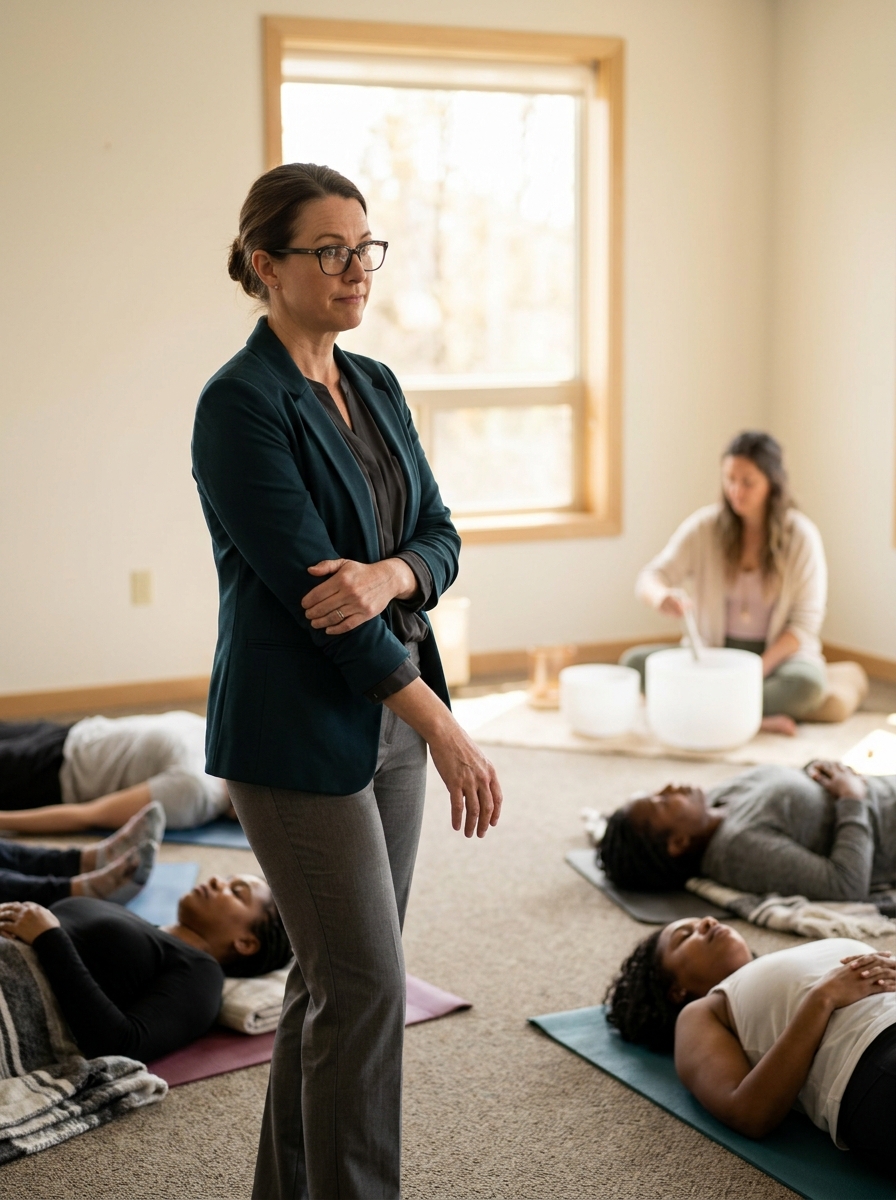
Between published studies and marketing claims sits a third category: practice-based pattern, observed weekly, at scale. My team runs more than 30 experiential wellness sessions a week across 11 treatment locations in Los Angeles and Orange County, with a bench of 20 facilitators and growing. That's not a controlled trial, and I won't dress it as one. It is a repeating observation base most providers and most studies never get.
Here's what that base shows, consistently enough that I treat it as operational evidence.
Sharing moves first. Clients who arrived guarded start volunteering their experiences after sessions, and that willingness to speak predicts the rest of the arc.
Sleep follows within days, then presence and mood across weeks. Between week one and week four of consistent sessions, groups shift from compliance to participation, and the week-to-week map of that arc is the most reliable pattern I own.
And the counselor reports converge: client satisfaction up, experiential sessions and clinical work reinforcing each other rather than competing, staff surprised by the professionalism of practitioners they expected to be hobbyists.
None of that replaces the literature. It answers the question the literature can't: what happens when this is implemented well, in buildings like yours, month after month.
The right question to ask a provider
If "is this evidence-based" is the wrong opening question, what's the right one?
Ask for client testimonials.
It sounds almost too simple, but watch what it does. A provider with real institutional clients can produce named, checkable references: clinical directors who will tell you how the sessions changed attendance, what the counselors noticed, whether programming ever went dark. A provider without them will pivot back to modality claims and borrowed statistics.
The question also protects you from the reverse failure: dismissing a good provider because the published literature on their specific modality is thin. References from organizations like yours are exactly the evidence the journals haven't gotten around to collecting.
Evidence from literature tells you the category can work. Testimonials from organizations like yours tell you this provider does work. You need both, and the second is rarer.
Mine are on the record, and the durations matter as much as the names. Aya Healthcare has been a partner since 2017, and their senior recruitment manager describes the results as measurable: teams staying even-keeled under stress using techniques from the sessions. Kaiser Permanente directors across two programs have put their names to testimonials. And Keefer W., Regional Director at Clear Behavioral Health, whose mental health and dual diagnosis programs my team serves week in and week out: "Their expertise in yoga, breathwork, meditation and sound healing is evident, and their services have truly made a positive impact on our wellness initiatives."
Seven-plus years with one client. Repeat bookings from the most evidence-demanding health system in the country. That's the evidence category providers can't borrow from a journal.
The honest position, compressed
Stay skeptical. Just point the skepticism at the right question.
Not "do I believe in sound healing," but "does this move the outcomes I'm accountable for, with my population, in my building, delivered by people I've checked." On cravings, regulation, sleep, engagement, and retention-supporting behaviors, the evidence and my own years in these rooms say yes, when willingness and buy-in are built alongside it.
And notice what the honest version of the answer buys you operationally. A program built on modest, real claims survives its first setback, because nobody promised a miracle. A program sold on inflated numbers dies the first month the numbers wobble. Evidence honesty isn't just ethics in this field. It's how experiential programming keeps its budget line through a hard quarter.
Picture your next vendor conversation: instead of nodding through modality claims, you're asking for three director references and the provider's failure cases, and the conversation gets honest fast.
Evidence-minded delivery, if you want it
That's the standard Coliberation Wellness was built to meet: certified, trauma-informed, insured practitioners across yoga, sound healing, breathwork, and mindfulness meditation, delivered in person, with named institutional references and a no-promises stance you can hold me to.
There's one operational guarantee behind our model that references mention unprompted, and I explain it inside the operator's guide to experiential therapy for treatment centers.
Skeptics welcome. Bring me your hardest case. I read every message.
Warmly,
Kara