A residential detox facility once hosted a sound healing session, the flagship of its new experiential therapy programming, in its living room.
While the facilitator played, staff members microwaved meals a few feet away. Groceries got unloaded. Conversations carried on. Doors opened and closed the entire hour.
The session wasn't just compromised. It was counterproductive. Clients trying to relax got frustrated instead, and the facilitator spent the hour fighting for a container that didn't exist. The facility had bought the right service and delivered it into the wrong conditions, and the difference swallowed the whole investment.
That's the gap this post is about. The best experiential therapy programs for addiction treatment don't have better yoga or fancier bowls. They get a handful of operational details right that everyone else underestimates.
One clarification before the list, because it shapes who you hire for what. A facility's experiential programming usually spans two distinct layers: experiential therapy proper, the clinician-delivered treatment work (psychodrama, art, equine), and experiential wellness services, the regulation practices my team supplies (yoga, sound healing, breathwork, meditation), delivered by certified practitioners who don't treat diagnoses. This post's operational rules apply to both, and the strongest programs run both without confusing the two.
The best experiential therapy programs share five traits: institutional buy-in from administrators down to every counselor, a contained and dedicated space, a consistent cadence of two to four sessions per week, credentialed trauma-informed practitioners, and reliable coverage so programming never goes dark. The modality matters less than the machinery around it.
I've watched these details decide outcomes across addiction recovery, dual diagnosis, and mental health programs. Here's the full list, including the story above and what fixed it.
Buy-in is the multiplier
The single biggest separator between a facility that gets real results from experiential therapy and one that just fills a calendar slot is buy-in. Not a signature on a contract. Belief, at every level of the organization, that these sessions enhance the clinical team's own capacity to do their jobs.
When administration believes and counselors don't, clients read it instantly. Sessions get framed as a break from treatment instead of part of it. Attendance erodes. The calendar slot survives; the outcomes don't.
When the whole building believes, everything downstream gets easier: scheduling conflicts resolve in the program's favor, staff route clients into sessions with conviction, and participation policies hold.
If you can only fix one thing after reading this, fix this one.
The room is part of the intervention
Back to that living room.
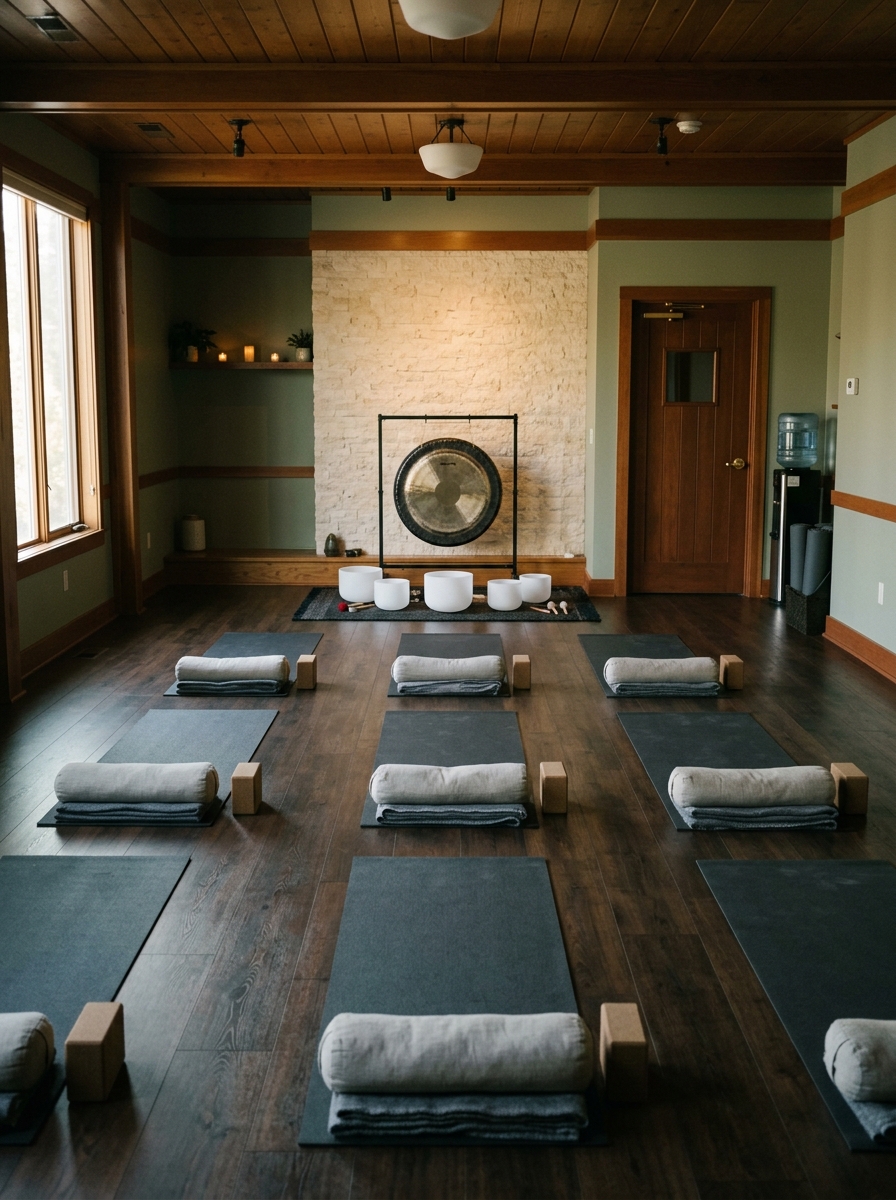
What fixed it wasn't a better facilitator. It was a dedicated, contained space: a room with a door, protected from kitchen noise and foot traffic.
For trauma populations, surprise sounds aren't a minor annoyance. A nervous system that's beginning to let its guard down interprets a slammed door as evidence it was wrong to relax. The mechanism these sessions work through requires safety, and safety requires containment.
The checklist is short and cheap compared to what facilities already spend:
- A room with a door that closes, away from kitchens, entrances, and offices
- Enough floor space for mats with real spacing between bodies
- Supportive props: yoga mats, blankets, blocks, pillows, bolsters
- Lighting that can come down and temperature on the warm side of neutral
- A visible schedule so the room is protected at session times
I've seen facilities improvise well when a perfect room doesn't exist, hanging a curtain where a door is missing. The point isn't luxury. It's a defended perimeter for one hour.
Cadence: two to four sessions a week, held steady
Programs ask what dose actually moves engagement. Across the locations my team serves, the pattern is consistent: two to four sessions per week per program is where change shows.
A typical start is one yoga session and one sound healing session weekly. As census grows, locations add breathwork and mindfulness meditation, then second yoga and sound sessions. The specific mix matters less than the consistency; clients build routines around these sessions, and routine is part of what keeps a dysregulated person regulated.
One scheduling rule my team holds: never directly after meals. A body working on digestion can't fully move, breathe, or receive.
The consistency logic has research behind it too. Reviews of yoga and mindfulness as complementary therapies for addiction repeatedly tie benefits to sustained practice rather than single exposures, which matches what I watch on the ground: the first sessions loosen tension, and the compounding shifts arrive across weeks of steady rhythm.
What the Monday reports say
When a program is built on the traits above, the feedback from clinical teams turns strikingly consistent.
They report client satisfaction they didn't expect. They notice the experiential sessions and the clinical work supporting each other instead of competing for calendar space: a client who regulates in the morning session does deeper work in afternoon group. And they comment on the professionalism of the practitioners, which tells me the credential misconception has quietly died in that building.
The tell I listen for is surprise. Directors expect a pleasant amenity. What they describe a month later is infrastructure.
Fit the work to the population in the room
The best programs also match sessions to who is actually in the building, because the same modality lands differently across levels of care.
Addiction recovery and detox settings carry 12-step considerations. Clients are working with cravings, often raw from withdrawal, repatterning their lives around sobriety. Sessions there lean restorative, and facilitators frame reflections around the transition into the sober self: what to keep, what to release.
Mental and behavioral health settings hold a different mix: anxiety, depression, professional overwhelm, identity crises, personality disorders, suicidality. Same instruments, different room, and a practitioner who understands which room they're standing in delivers a materially different session.
Dual diagnosis programs blend both. A provider who can't describe how their sessions change across these populations hasn't worked in them.
What implementation actually looks like
Facilities imagine adding experiential therapy is complicated. Done right, the sequence is short, and knowing it helps you hold any provider accountable to it.
It starts with your programming decision: how many sessions per week, which modalities, which days and times. Most facilities start with yoga and sound healing, then add breathwork and meditation as the program grows.
Then comes staffing. When my team takes this on, I either assign from my existing bench or recruit practitioners in your area against my hiring protocol: values first, credentials verified, trauma-informed training confirmed. Every practitioner signs a contractor agreement before they're introduced to your organization.
Then your side runs its process: HR paperwork, HIPAA compliance, a health check and TB test. Once those clear, the practitioner is on your calendar.
Two things about that sequence matter for quality. First, the vetting happens BEFORE your HR team ever sees a name, so your compliance process is a confirmation, not a filter doing discovery work. Second, because scheduling, substitution, and invoicing run through one partner, your clinical staff never absorbs the administrative load that kills programs quietly.
What arrives on the other side is mundane in the best way: a Monday schedule that simply happens, week after week, across every location that needs it.
Staff belong on the mats
I've always recommended that counselors and clinical staff join sessions, and the reasons compound.
Staff who have felt a session understand why containment matters, because they've experienced what a slammed door does from inside the practice. They refer clients into the work with conviction instead of a shrug. And they need it themselves: the people holding space for trauma all day are carrying the most dysregulated nervous systems in the building.
There's a quieter benefit. When clients see their counselor on a mat, the sessions stop being something done TO clients and become something the community does. That shift shows up in participation within weeks.
Participation policy: non-optional, with dignity
Here's an uncomfortable operational truth: in participatory modalities like yoga and breathwork, some clients will text, wander, or refuse. The programs that get results treat experiential sessions as part of treatment, not an elective. No opting out to read a book, with exceptions for injury.
But the enforcement can't come from the facilitator. My practitioners aren't there to discipline anyone; they hold the room, and they're trained to ask a disruptive client to get with the program or step out. The policy behind them has to come from the facility, which is buy-in again, wearing its work clothes.
Handled with dignity, resistance becomes material. The client who spent week one texting through yoga and week four leading the group into savasana is the retention story every director wants.
There's a facilitation nuance worth naming. Resistance in these rooms is rarely about the practice; it's fear wearing a bored face. Fear of progress, fear of healing, fear of leaving a familiar environment of limitation.
My practitioners are trained to expect it, to never take it personally, and to keep the invitation open. The clients most resistant in week one are frequently the ones sharing most in week four.
The credential misconception that sinks good programs
There's an assumption I still meet in clinical teams: that the people delivering these sessions are lightweight hires, pleasant hobbyists with a weekend certificate.
The reality across my own team: many hold degrees, often advanced degrees, alongside high-level certifications, trauma-informed training, and years of experience inside addiction recovery and behavioral health settings. Some are licensed therapists themselves, though in the wellness role they deliver regulation sessions, not treatment; the therapy-versus-wellness line stays bright even when one person could stand on either side of it.
Why does the misconception matter operationally? Because facilities that believe it under-vet. They hire the first available local teacher, skip the trauma-informed screen, never verify insurance, and then a client dissociates mid-session in front of someone who has never seen it happen.
The best experiential therapy programs vet practitioners the way they'd vet clinical hires: certifications verified, liability insurance confirmed, trauma capacity tested, presence and room-command assessed.
My own screen starts before any interview. I look at how a practitioner presents publicly: whether their work shows a deeper purpose, an inclination to serve people moving through hard seasons, or whether the signals point elsewhere. Skills can be auditioned. Orientation toward service can't be taught in time for your clients to benefit from it.
Training depth matters too, and format is a tell. In-person training beats online across every modality, and hours matter: a 20-hour certificate is a beginner I'd audition and coach, while someone with hundreds of training hours and an active practice brings command you can feel from the back of the room.
If you're doing this vetting yourself, what is experiential therapy includes my five-point provider checklist. It's the compressed version of how I audition every practitioner who joins my team.
Start with sound healing if you can only fund one modality
Directors with a limited budget ask me which modality to start with. My answer is consistent: sound healing.
The reasoning is practical. Clients in treatment are often exhausted by the meeting-heavy therapy schedule. They sit in groups, process in counseling, work the program, and by mid-afternoon many have gone numb.
Sound healing requires almost nothing from them: lie down, get comfortable, receive. Participation demand is near zero and the restorative payoff is immediate, which makes it the easiest door into experiential work for a skeptical or depleted population.
Yoga typically comes second, adding movement and structure. Breathwork and mindfulness meditation come after, once the population is warmed to the work and ready for practices that ask more.
Evidence-minded directors sometimes want the research ranking before choosing. Fair instinct; the honest answer about what's proven and what isn't lives in is experiential therapy evidence based, and it should inform, not replace, the operational logic above.
Who this work is not for
Trust cuts both ways, so here's mine: I turn facilities down.
If a location is focused on profiting from addiction rather than treating it, chasing recurring clientele instead of recovery, my team doesn't belong there. And if a facility won't provide the basic space, support, and equipment practitioners need to do the job, the sessions will fail no matter who delivers them, and I'd rather decline than preside over that.
The inverse is the good news. A facility that provides a contained room, backs the schedule, and puts its counselors on the mats will get outcomes from almost any credentialed provider. The bar isn't exotic. It's just rarely cleared.
The pattern behind all of it
Read back through the list and one thing repeats: none of these traits is about the modality. They're about the machinery around it. Buy-in, containment, cadence, credentialing, coverage. The best experiential therapy programs are operationally boring in the best possible way.
Picture your facility six months from now: the session room is protected on the schedule, your counselors take turns on the mats, and the Monday reports read like the ones I get, clinical teams surprised at how well the sessions and the therapy support each other.
Getting the machinery without building it yourself
The five traits above are exactly what Coliberation Wellness packages. We place managed teams of certified, trauma-informed, insured practitioners across yoga, sound healing, breathwork, and mindfulness meditation, matched to your populations, with the vetting already done and one agreement covering every practitioner and location.
The fifth trait, coverage, is the one facilities can't solve with a single hire, and the way we guarantee it is the piece of the model I save for the operator's guide to experiential therapy for treatment centers.
If your program has a calendar slot that isn't earning its keep, tell me what's happening in that room. I read every message.
Warmly,
Kara